At a glance
What this service can cover.
- House and apartment lockouts
- Move-in and lost-key rekeying
- Deadbolt, lever, and latch repair
- Supported smart-lock installation
Tell us the usual workaround.
Maybe the door must be pulled tight before the deadbolt turns. Maybe the key only works if it is lifted. Maybe summer heat made a once-smooth latch start dragging. Those little routines are useful evidence, not details to hide.
The lock, strike, hinges, weather stripping, and door position work together. Replacing the cylinder without noticing the pressure on the bolt can leave a new lock feeling exactly like the old one.
Moving in? Start with access.
A new owner rarely knows how many old keys are still in circulation. If the existing locks are compatible, secure, and in good condition, rekeying can change which key works without replacing every piece of hardware.
Replacement makes more sense when a lock is damaged, heavily worn, unsuitable for the door, or incompatible with the access plan. We look at each opening instead of applying one answer to the whole house.
Rentals may need approval.
A tenant can call about a private unit lock, but management or owner approval may be required for shared entrances, master-keyed systems, or hardware controlled by the property. Have lease or residency information available.
For a rental turnover, decide who should receive keys and whether storage, garage, gate, or common-area locks are part of the work. A simple written list helps avoid changing the wrong cylinder.
Smart locks need a smooth door.
A keypad or app cannot overcome a bolt that hits the frame. Before installation, check door thickness, backset, handing, bore preparation, and whether the deadbolt moves freely with the door closed.
If you already purchased a smart lock, send the exact model and photos of both sides of the door. We can discuss likely compatibility without promising that every device fits every opening.
Let the regular user test it.
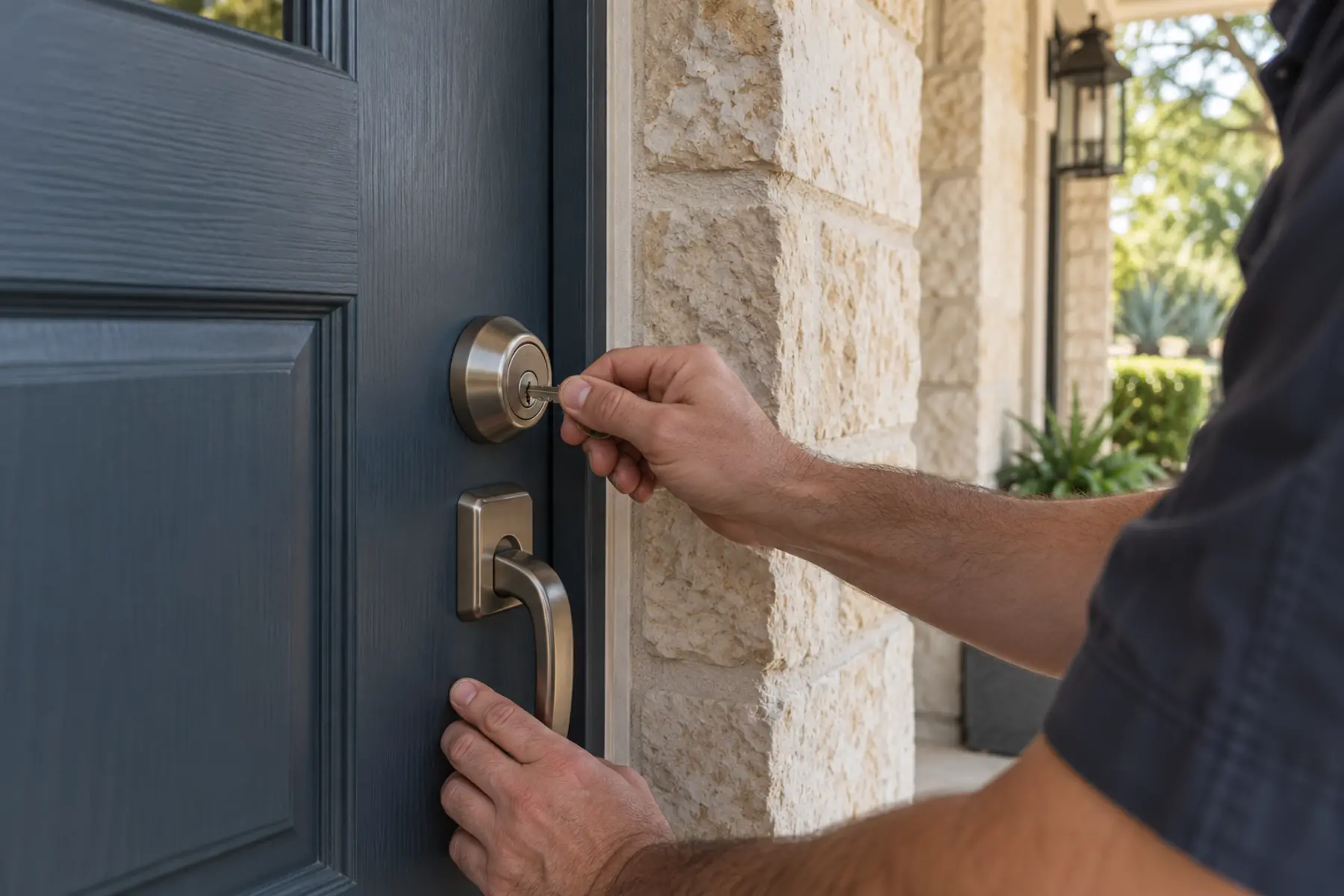
Operate the serviced door from inside and outside. Close it gently, lock and unlock it several times, and try every new key. On a smart lock, test the keypad and any agreed app functions after the mechanical check passes.
The person who uses the door every morning can feel whether the old workaround is gone. That final minute is more useful than a quick demonstration with the door left open.
A closer look
Walk the home before choosing hardware
Begin at the door used most often, then include side, rear, garage, patio, and detached-unit entrances. Look for different brands, keys, and generations of hardware. A quick walk can reveal that a one-lock plan is really an access plan for the property.
Think about the people who need entry: household members, roommates, caregivers, cleaners, contractors, or short-term guests. Mechanical keys, keypad codes, and smart-lock permissions each need a sensible handoff and removal process.
If a door is difficult to close, photograph the full opening, not only the lock. Settled hinges, swollen material, compressed seals, and strike position can affect the result. New hardware cannot correct every fit problem by itself.
After the work, give a regular user the key. Let them close and lock the door without coaching. If the old shoulder push or handle lift is still required, the visit should not be treated as fully explained.
Start with the condition now.
For residential locksmith, describe what still works as carefully as what failed. Mention whether the problem is constant or intermittent, whether another key or entrance works, and whether anything changed just before it began. Those details can affect the tools, parts, time, and even the type of provider the job needs.
Ask what the proposed work is meant to accomplish and what will remain unchanged. Entry restores access. Rekeying changes which key operates a compatible cylinder. Repair addresses a performance problem. Replacement changes hardware. Vehicle programming may cover some key functions without creating every remote feature. The right label should follow the desired result.
Before the technician leaves, test that result in normal conditions. Close the door, remove frame pressure, move other vehicle keys away, or try the old key after a rekey. A realistic final test is more valuable than a demonstration designed only to work once.
Three useful questions
Before you book.
Should I rekey after buying a home?
It is a practical way to remove uncertainty about old keys when the existing locks are compatible and serviceable.
Can a tenant change an apartment lock?
Approval requirements vary. Private-unit work may still require proof of residency, and shared or master-keyed hardware usually needs management authorization.
Can you install a smart lock I purchased?
Possibly. Share the model and clear door photos so compatibility and door condition can be discussed.