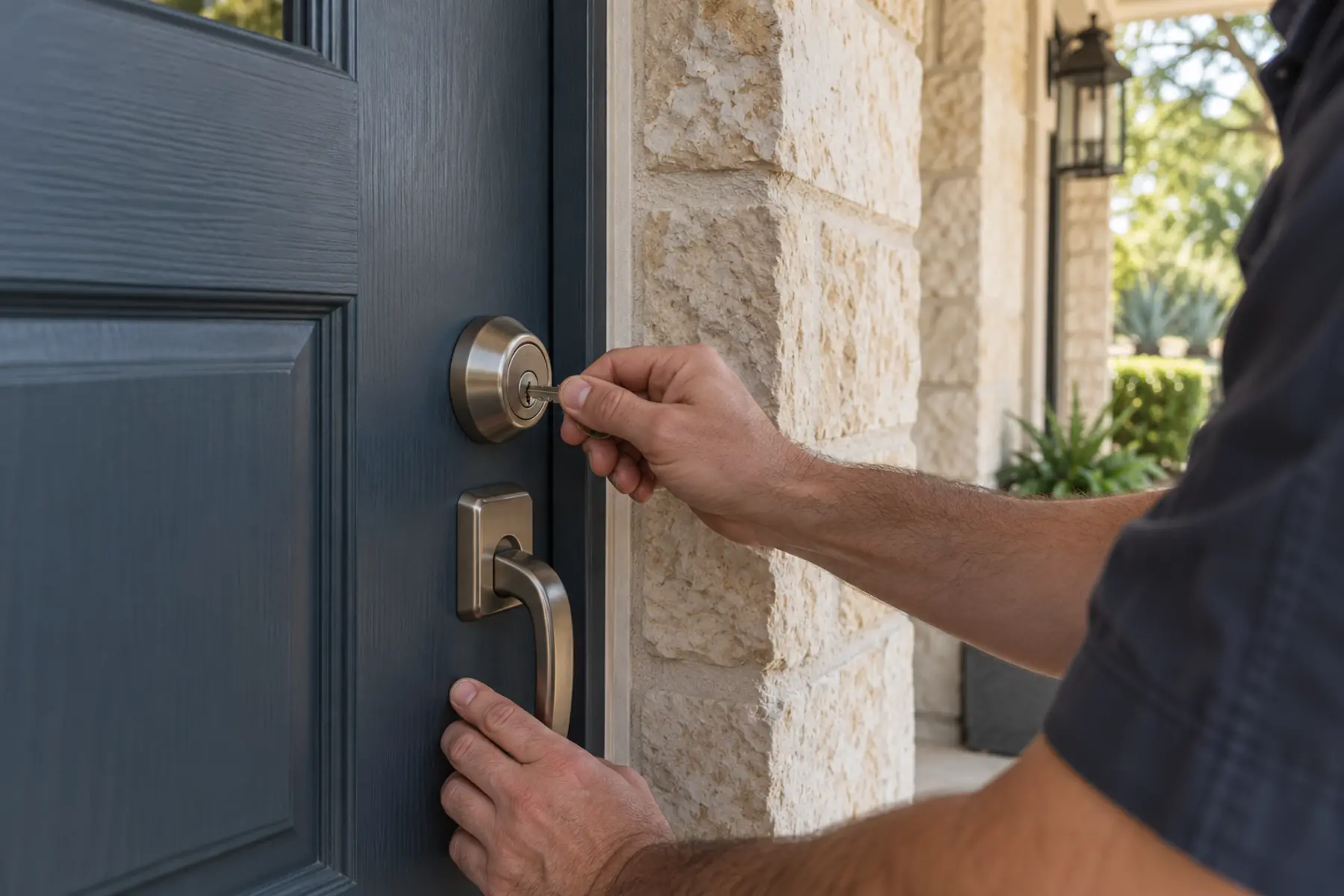
At a glance
What this service can cover.
- Move-in and rental rekeys
- Lost or unreturned key response
- Compatible locks keyed alike
- Home and small-business access changes
What rekeying changes.
The cylinder is adjusted so the old key no longer operates it, and a new key is introduced. The outside lock may look exactly the same afterward. That makes rekeying different from replacing the entire lock and different from copying another old key.
A rekey addresses key control. It does not repair a loose lever, a corroded lock, a sagging door, or a bolt that hits the frame. Those conditions may need separate work.
Good hardware can stay.
If the lock is compatible, secure, and dependable, replacement can add cost without adding much value. Rekeying can be a practical choice when the hardware works but the key history is uncertain.
When a lock is damaged, badly worn, poorly fitted, or no longer appropriate for the opening, replacement may be the clearer option. We explain the visible reason for that recommendation.
One key is not always practical.
Locks from different brands or product families may not accept the same key. Even compatible cylinders should not always be combined. A detached unit, storage room, office, or rental entrance may need separate access.
Bring the access goal, not only a pile of locks. Tell us which people should open which doors. That short conversation shapes a more useful result.
Count cylinders, not doors.
A door may have a knob and deadbolt, two deadbolts, or hardware on a secondary gate. Photos of both sides help identify the likely number and style of cylinders before the visit.
Do not forget doors that are rarely used. A back entrance with an old key can undermine an otherwise complete move-in rekey. Walk the property once and make a simple list.
Test the old key too.
Every new key should operate the intended lock smoothly with the door open and closed. Then confirm an old key no longer turns each changed cylinder. Keep one clearly identified old key for the test instead of throwing everything away too early.
Once the result is confirmed, distribute new keys deliberately. Avoid labels that reveal a home address or sensitive room if the key is lost.
A closer look
Plan the rekey before changing cylinders
List every cylinder and mark which doors should share access. A knob and deadbolt on one door count separately. So may a garage entry, gate, mailbox room, or detached office, although not every type belongs in the same service scope.
Separate uncertainty about old keys from dissatisfaction with the hardware. Rekeying is designed to change which key works. If the lever is loose, the deadbolt drags, or the finish is badly corroded, another repair or replacement decision is present.
Ask how many new keys are included and where duplicates will be made later. Restricted or uncommon keyways may have different duplication rules. General walk-in key copying is not offered by LockReach, so the future plan matters.
Keep one old key until testing is complete. Try it at every changed cylinder, then store or destroy it appropriately. The visual appearance of a rekeyed lock usually does not prove that access changed.
Start with the condition now.
For rekey locks, describe what still works as carefully as what failed. Mention whether the problem is constant or intermittent, whether another key or entrance works, and whether anything changed just before it began. Those details can affect the tools, parts, time, and even the type of provider the job needs.
Ask what the proposed work is meant to accomplish and what will remain unchanged. Entry restores access. Rekeying changes which key operates a compatible cylinder. Repair addresses a performance problem. Replacement changes hardware. Vehicle programming may cover some key functions without creating every remote feature. The right label should follow the desired result.
Before the technician leaves, test that result in normal conditions. Close the door, remove frame pressure, move other vehicle keys away, or try the old key after a rekey. A realistic final test is more valuable than a demonstration designed only to work once.
Three useful questions
Before you book.
Is rekeying cheaper than replacing locks?
It often can be when the existing hardware is compatible and in good condition, but the number and type of cylinders affect the total.
Will the old key stop working?
Yes. That is the purpose of a successful rekey for the changed cylinder.
Can different lock brands use one key?
Sometimes, but not always. Keyway and cylinder compatibility must be checked.