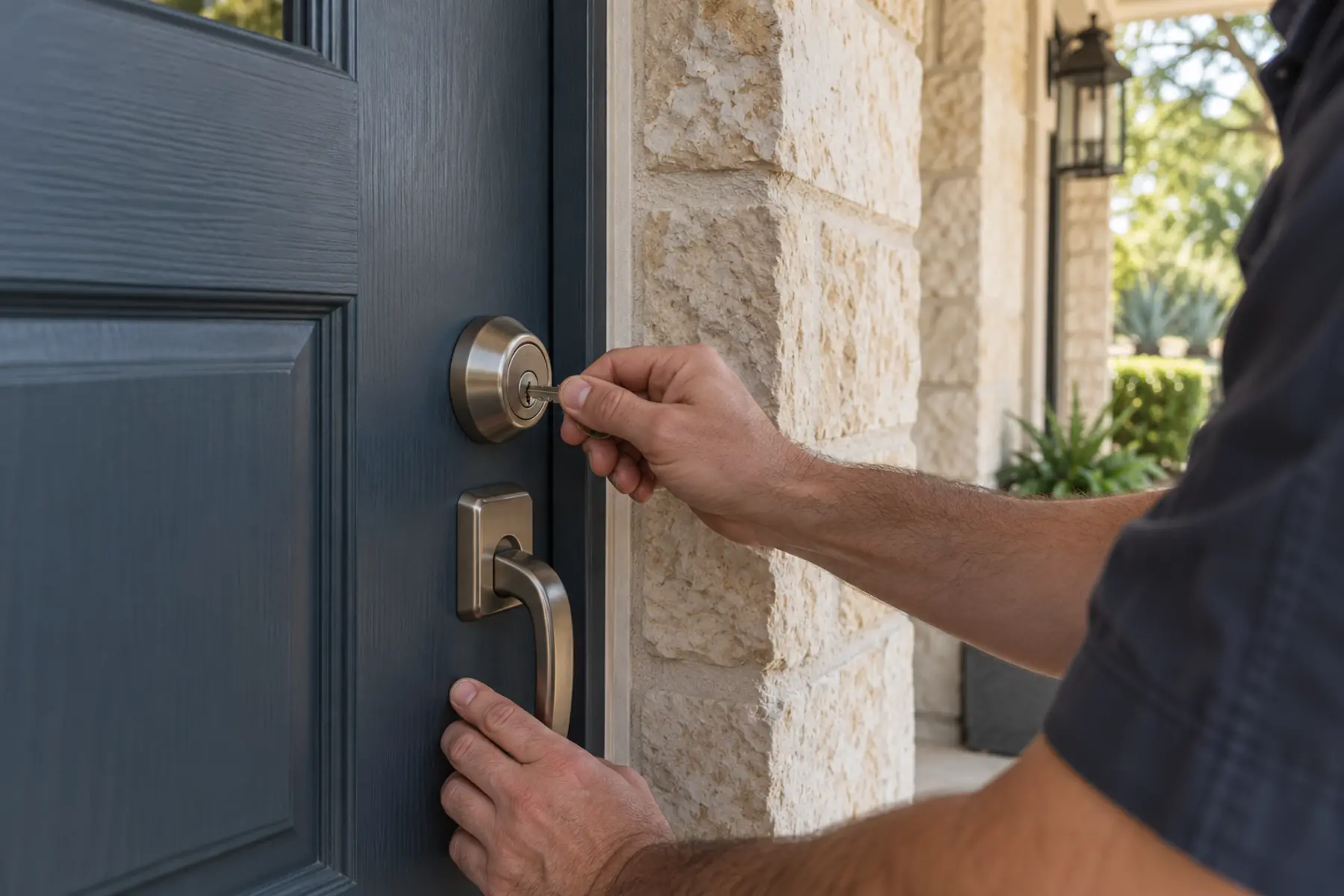
At a glance
What this service can cover.
- Sticking and unreliable lock diagnosis
- Deadbolt, knob, lever, and latch repair
- Compatible replacement hardware
- Supported smart-lock installation
Test the door open and closed.
If the deadbolt turns freely while the door is open but binds when it is closed, the cylinder may not be the main problem. Hinges, frame movement, weather stripping, strike position, or door pressure can be involved.
Mention that test before the visit. It is one of the simplest ways to avoid replacing a healthy lock while leaving the real cause in place.
Repair should leave dependable hardware.
Loose fasteners, worn internal parts, broken springs, and dirty or damaged cylinders do not all have the same fix. Some problems can be corrected cleanly. Others have progressed far enough that replacement is the more dependable choice.
After more than 20 years in the business, we still prefer a visible explanation over a blanket rule. You should understand what failed and why the proposed work addresses it.
New hardware must fit the door.
Door thickness, bore size, backset, handing, edge preparation, and strike position all matter. Commercial and residential products that look similar may be designed for very different use levels.
If you already own the hardware, send the model number and clear photos. A professional installation cannot make an incompatible device become the right fit.
Smart still depends on mechanical.
A keypad, motor, or app adds another way to control the lock, but the bolt still has to travel into the frame. A motor that repeatedly forces misaligned hardware may drain batteries and wear components.
The best smart-lock installation starts with a door that closes normally. We test the mechanical path before setup and explain any feature that remains dependent on the manufacturer app or home network.
Finish with a real-use test.
Close it the way the household or staff usually does. Test the latch, deadbolt, lever, key, and any keypad function from both sides. If the old habit was lifting or leaning on the door, check that it is no longer needed.
A brief explanation of maintenance and warning signs can help preserve the result. Stop using a key that starts bending, and address a loosening handle before it fails during a lockout.
A closer look
Choose hardware by fit and use
A front door used six times a day and a commercial entrance used hundreds of times do not demand the same product. Weather exposure, user strength, accessibility, finish, key system, and smart features can all affect selection.
Photograph the door edge, both faces, the strike area, and the existing hardware. Include a ruler only if it can be held safely. Backset, bore size, thickness, handing, and old modifications may change which product will fit cleanly.
If a smart lock is planned, decide who will administer codes and what happens during a battery or network problem. Mechanical backup and door alignment remain important even when the interface lives on a phone.
Save model information and any keys after installation. Test the door during its normal routine, not while holding it in an easy position. A well-fitted lock should not require a trick that every user has to learn.
Start with the condition now.
For lock repair & installation, describe what still works as carefully as what failed. Mention whether the problem is constant or intermittent, whether another key or entrance works, and whether anything changed just before it began. Those details can affect the tools, parts, time, and even the type of provider the job needs.
Ask what the proposed work is meant to accomplish and what will remain unchanged. Entry restores access. Rekeying changes which key operates a compatible cylinder. Repair addresses a performance problem. Replacement changes hardware. Vehicle programming may cover some key functions without creating every remote feature. The right label should follow the desired result.
Before the technician leaves, test that result in normal conditions. Close the door, remove frame pressure, move other vehicle keys away, or try the old key after a rekey. A realistic final test is more valuable than a demonstration designed only to work once.
Three useful questions
Before you book.
Can a sticking lock be repaired?
Often, but the cause may be the cylinder, latch, strike, hinges, or door position. The opening needs to be checked.
Can you install hardware I already purchased?
Possibly. Compatibility and condition must be reviewed first. Send the model and door photos.
Do you install smart locks?
Supported residential smart locks can be installed when the device, door preparation, and mechanical alignment are compatible.