24/7 mobile locksmith service in Austin, TX(737) 243-8477

About LockReach Locksmith Austin

Experience should simplify the answer.

More than 20 years in the locksmith business taught us to ask better questions, explain the boundary, and test the result in the way the customer will actually use it.

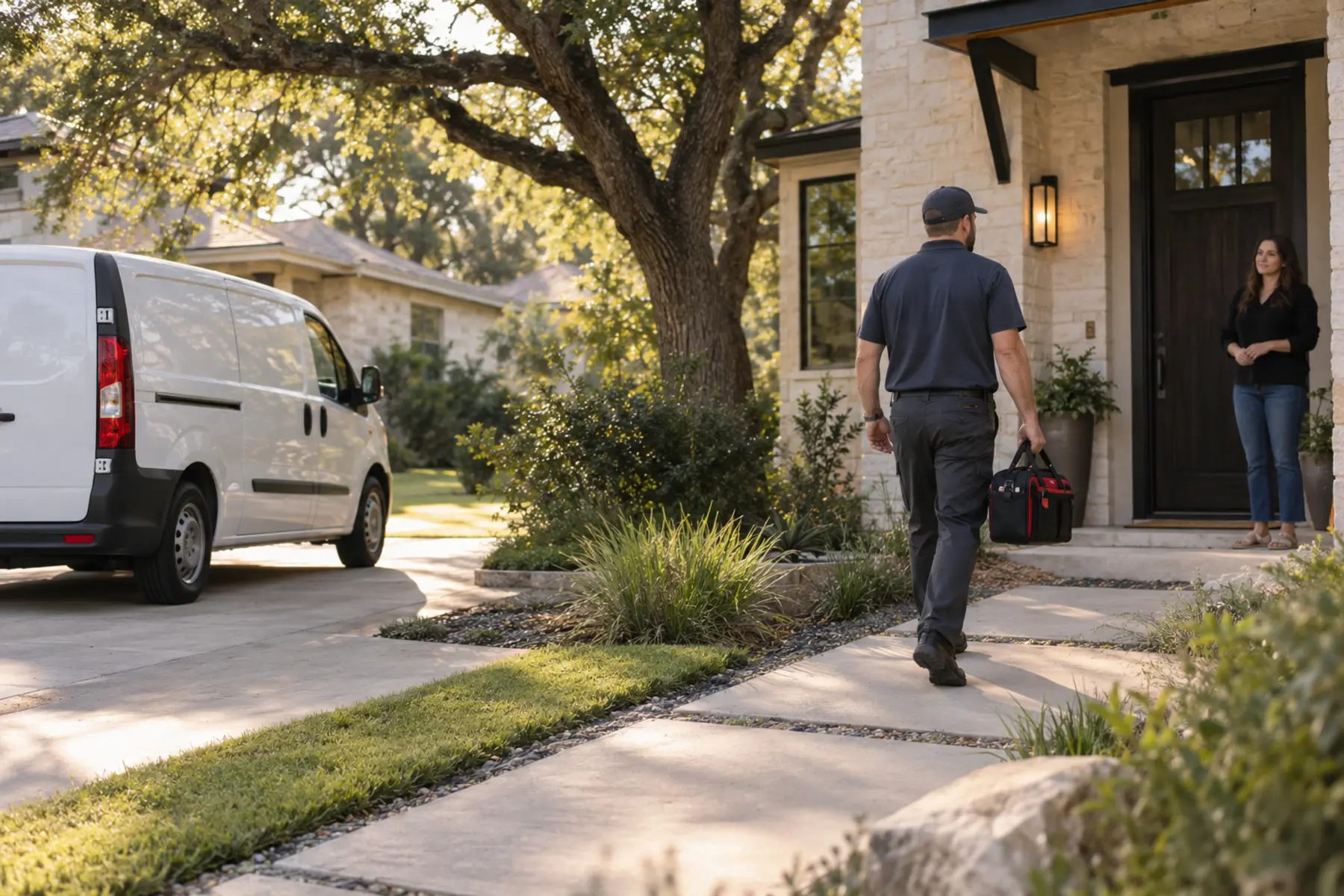
A mobile locksmith arriving at an Austin customer home

LockReach was built around a basic idea: customers should understand what is happening before a tool touches the lock.

People do not usually call a locksmith on a quiet, empty afternoon with nothing else planned. They call from a driveway, a hallway, a loading door, a parking garage, or a new home full of boxes. The pressure is real. That makes calm communication more important, not less.

Our job begins by narrowing the situation. What worked yesterday? Does the deadbolt move with the door open? Is there one working car key or none? Who can authorize changes at the business? Which entrance belongs to the unit? These questions are not a delay. They are how an experienced mobile service prepares correctly.
What our experience changes

Three habits we still trust.

Years matter when they improve the choice at the door. A long timeline by itself is not proof.

01

Look beyond the cylinder.

A lock can feel broken because the door has shifted, the strike is tight, the closer is fighting the latch, or a smart-lock motor is forcing a misaligned bolt. The opening works as a system.

02

Say what is outside the scope.

We do not advertise safes, motorcycle work, or a walk-in key-copy counter. Complex access control and specialized door systems may need another provider. A clear boundary protects the customer.

03

Let the last test be real.

Close the door. Move old fobs away. Try the previous key after a rekey. The final check should reproduce ordinary use, not a convenient demonstration.

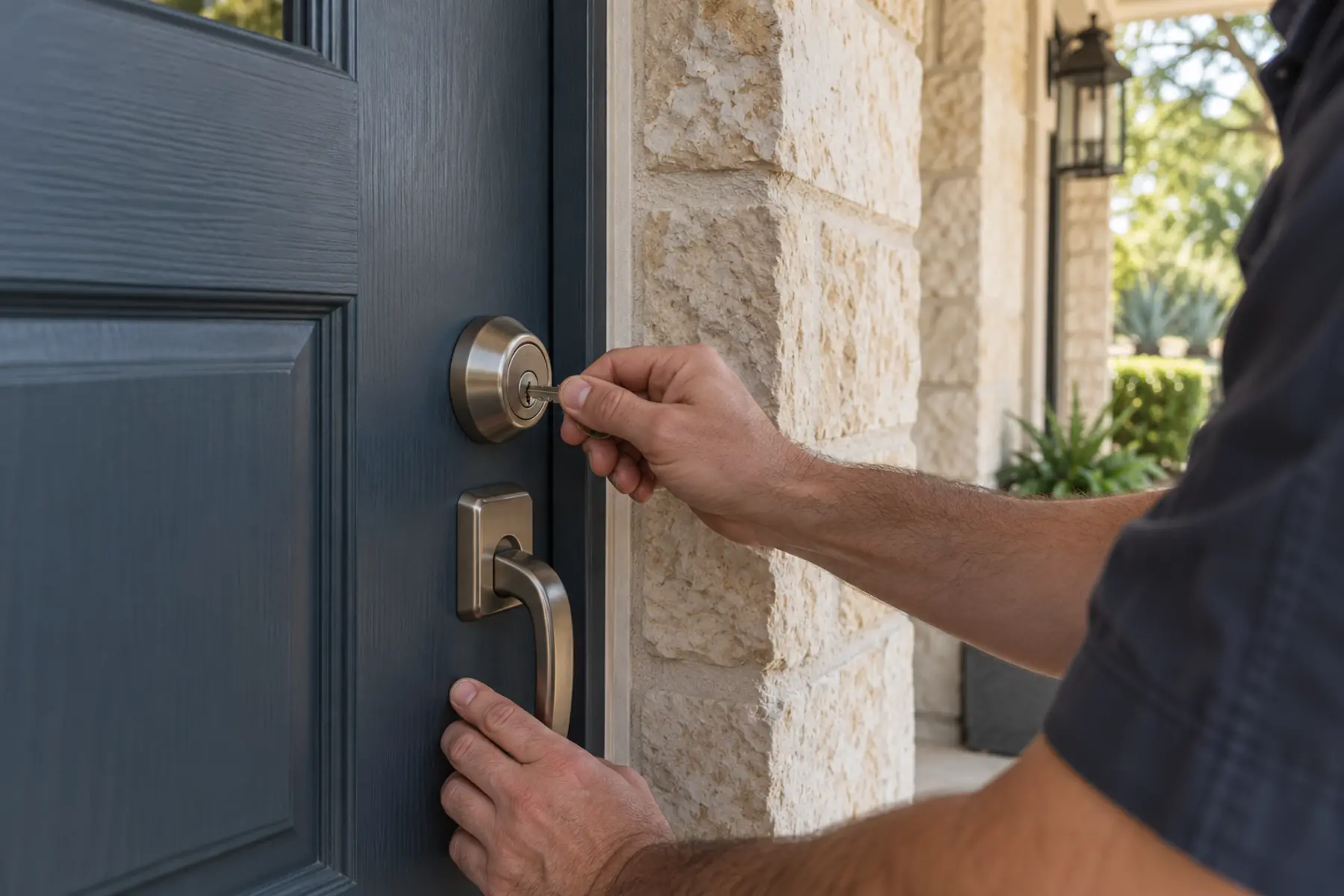
A locksmith carefully testing a deadbolt at an Austin home

A small story we recognize

"The lock is new, but it still sticks."

That sentence appears in many forms. A homeowner replaced the deadbolt. A renter received a fresh key. A business installed a new lever. The hardware looks better, but everyone still pulls the door before turning it.

The clue is the pull. If the bolt moves easily with the door open and binds only when closed, another lock may not change the result. The strike, hinges, weather seal, or door position deserves attention.

This is the kind of ordinary observation that 20 years of work should provide. Not a dramatic promise. Just a better question that saves the customer from repeating the same fix.

Austin adds its own context: older homes beside new infill, apartment access managed by another party, mixed-use buildings with several lobbies, and vehicles parked across broad campuses and garages. Mobile service needs local directions and practical judgment together.

What a good visit should include

Three simple stages.

The work may be quick. The responsibility around it should still be visible.

Before

Enough detail to prepare honestly.

For a home or business, we ask about the exact entrance, property type, hardware, authorization, and what the door does when it closes. For a vehicle, we need the year, make, model, key type, parking location, and whether any working key remains.

Photos can help when they show the whole door and then the hardware. A close-up by itself can hide the shifted frame or second lock that changes the plan. Personal documents should stay out of ordinary photos.

During

A clear scope before irreversible work.

The proposed service should connect the symptom to a result. Rekeying changes the working key. Repair addresses performance. Replacement changes the hardware. Entry solves access but may not solve the reason the lockout happened.

Customers should understand what the quote includes and what could change it. Destructive methods should have a reason. A locksmith visit should not depend on pressure, vague labels, or a starting price that quietly describes only one step.

After

A real-world test and a useful explanation.

Close the door, operate the hardware from both sides, and let the regular user try it. After a rekey, confirm that the old key no longer works. After vehicle programming, move other fobs away and test each included function on the new device.

Ask what caused the problem, what remains outside the completed scope, and what warning sign deserves attention later. Good service leaves working access and fewer mysteries.

Why Austin changes the call

Austin changes the call.

Austin service can mean a limestone home shaded by live oaks, an older Hyde Park door with years of modifications, a newer Mueller townhouse with a smart deadbolt, a South Congress business entrance used all day, or a vehicle several levels down in a Domain garage.

The useful local knowledge is knowing which question comes next. Is the entrance private or building-controlled? Can a service vehicle reach the driveway? Is the business behind a shared landlord system? Will the phone work below grade? Is the customer near I-35 during a major event?

LockReach does not turn those details into dramatic claims about reaching every corner in the same number of minutes. We use them to plan the meeting point, explain the likely scope, and provide a current route answer.

The business address on W Braker Ln anchors the operation in North Austin. The service itself is mobile. Call before visiting and arrange the work where the lock, door, or supported vehicle is located.

Talk it through

Talk with LockReach Locksmith Austin.

Tell us what is happening at the door or vehicle. We will help narrow the next step.

Call (737) 243-8477
Call LockReach(737) 243-8477